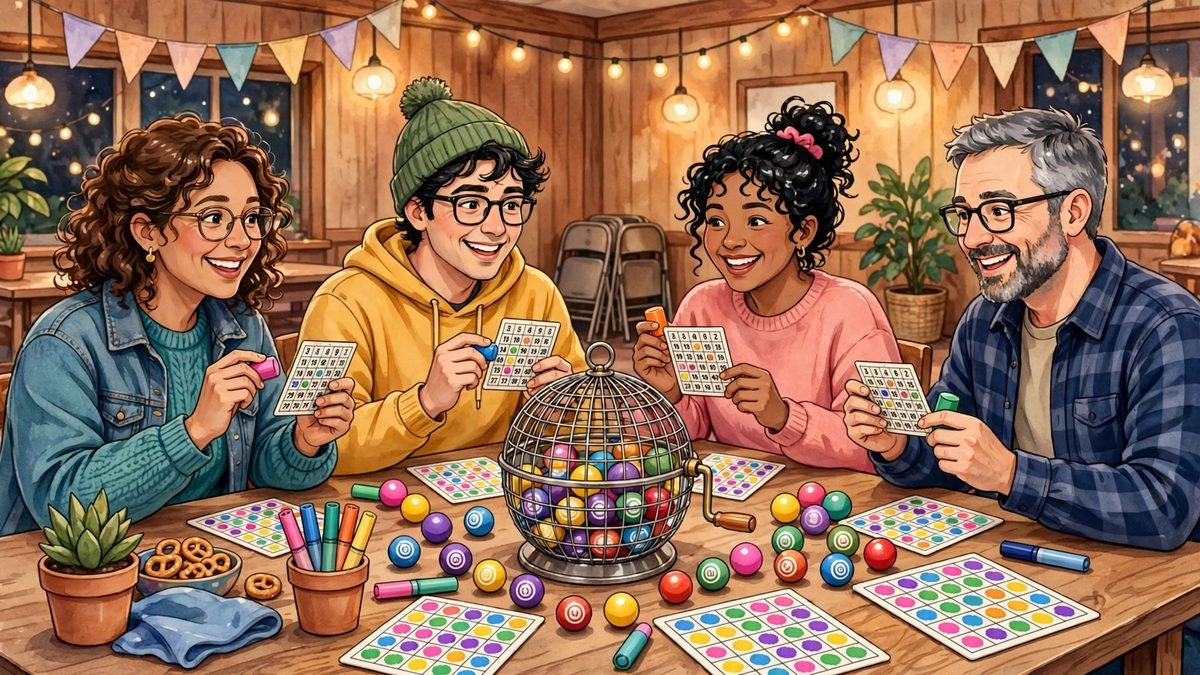
Bingo Night Ideas: How to Host a Night Everyone Loves
Few party formats are as universally loved as bingo night. Grandparents, kids, coworkers, neighbors — everyone understands the rules in thirty seconds, and everyone feels the same jolt when they are one number away. These bingo night ideas will help you host a polished, lively evening, including how to call numbers with free random tools instead of an expensive cage set.
You will find setup checklists, calling methods, fun game variations, prize ideas, and answers to the questions every first-time host asks. Shuffle up — the first ball is about to drop.
Table of Contents
- Why Bingo Night Works for Any Crowd
- How to Set Up Your Bingo Night
- Calling Numbers Without a Cage
- 5 Fun Bingo Variations to Try
- Bingo Night Theme Ideas
- Prizes and Hosting Tips
- Frequently Asked Questions
Why Bingo Night Works for Any Crowd
Bingo’s genius is its simplicity. There is no strategy to learn, no long rulebook, and no player left out because they arrived late — latecomers just grab a card and join the next round. The game is pure chance, which means a six-year-old and a sixty-year-old compete on perfectly equal footing. Modern bingo has been packing halls since the 1920s, and the home version keeps all the excitement with none of the entry fee.
It is also wonderfully flexible. Play for twenty minutes as a party warm-up or run a full evening with a dozen rounds. Mix ages, mix skill levels, mix prize tiers — bingo absorbs it all without complaint.
How to Set Up Your Bingo Night
Start with the cards. Free printable bingo cards are easy to find online, or you can make your own with a simple grid — the standard American card is five columns labeled B-I-N-G-O with numbers 1 to 75. Print enough so everyone can play two or three cards at once; multi-card players are always the loudest when they win.
For markers, anything works: coins, dried beans, bottle caps, or proper daubers if you want the full hall experience. Set up a calling station where everyone can see the drawn numbers — a whiteboard, a shared screen, or just a loud, clear voice. Decide your winning patterns before the first round and announce them: a straight line for the warm-up rounds keeps things moving.
Send invitations with the essentials: date, start time, whether guests should bring anything, and the theme if you have one. A simple group message a week ahead plus a reminder the day before is plenty. Ask about the headcount so you print enough cards, and have a few extras — bingo nights have a way of attracting neighbors once the calling starts.
Calling Numbers Without a Cage
You do not need a mechanical ball cage to run a fair game. A random number generator set to draw numbers between 1 and 75 does the job perfectly — set it to avoid repeats, call each number aloud, and display the running list so players can double-check their cards.
For extra theater, announce numbers the traditional way: the letter plus the number, like “B-7” or “O-68.” Pause a beat between calls so multi-card players can keep up. If two players claim bingo on the same number, settle it with a quick dice roll or split the prize — decide which before the night starts. And if you ever need a straight yes-or-no call during setup — “Should we play one more round?” — the decision wheel on the homepage answers in one spin.
5 Fun Bingo Variations to Try
1. Picture Bingo for Kids
Swap numbers for pictures — animals, foods, emojis. Young kids who cannot read numbers yet can play fully, and the rounds go fast. The random animal generator is a fun way to pick which pictures go on the cards.
2. Blackout Round
The finale: players must cover every square on their card. It takes longer, so save it for the last round and attach the biggest prize. The slow build of tension as cards fill up is unbeatable.
3. Four Corners
Win by marking only the four corner squares. It is quick, surprising, and a great palate cleanser between longer rounds. Announce it as a speed round to keep energy high.
4. Themed Bingo
Match the cards to the occasion: movie titles for film night, holiday words for December, inside jokes for a birthday. Themed cards double as conversation starters and make the night feel custom-built.
5. Speed Bingo
Call numbers rapidly with no pauses — players who cannot keep up sit the round out. It is chaotic, loud, and hilarious as a one-off novelty round. Limit it to a single round per night so nobody feels left behind.
Bingo Night Theme Ideas
A theme turns a good bingo night into a memorable one. Pick a theme that fits your crowd and weave it through the cards, the prizes, and even the snacks. A movie night theme pairs film-title cards with popcorn prizes; a holiday theme uses seasonal words and festive treats; a travel theme features world cities and works beautifully for a fundraiser.
Themes also solve the prize problem, because themed prizes practically choose themselves. For a backyard summer night, think lemonade mixes and sunglasses; for a cozy winter evening, hot cocoa kits and warm socks. Announce the theme on the invitation so guests can dress for it — costumes optional, laughter guaranteed.
Prizes and Hosting Tips
Prizes do not need to be expensive; they need to be fun. A prize table with wrapped mystery gifts works brilliantly — winners pick without knowing what is inside. Mix practical items (nice chocolate, candles, gift cards) with silly ones (a trophy, a rubber duck in a crown). For kids’ nights, let every player leave with a small consolation prize so nobody goes home empty-handed.
As host, your real job is pacing. Keep rounds snappy, vary the patterns, and read the room — when energy dips, call a break for snacks. Verify every claimed bingo before celebrating; a quick card check keeps the game honest and teaches good sportsmanship.
Frequently Asked Questions
How many bingo cards should each player get?
Two cards per player is the sweet spot for casual nights — enough to stay engaged without getting overwhelmed. Experienced players can handle three or four. For kids under eight, stick to one card so the game stays fun instead of frantic.
What numbers go on a standard bingo card?
American bingo uses numbers 1 to 75 across five columns: B holds 1–15, I holds 16–30, N holds 31–45, G holds 46–60, and O holds 61–75. The center square is traditionally a free space. A random number generator set to 1–75 with no repeats calls the game fairly.
How do you call bingo numbers fairly without equipment?
Use a random number generator with repeat prevention, display each drawn number where everyone can see it, and call numbers clearly with a pause between them. Keep a visible list of called numbers so any player can verify their card. Transparency is what makes it fair.
What happens when two people call bingo at once?
Decide the rule before the night starts: either split the prize or settle it with a single dice roll or coin flip. Splitting keeps things friendly; a roll-off adds drama. Announcing the rule up front prevents all arguments.
How long should a bingo night last?
About two hours is ideal: ten to twelve rounds with a snack break in the middle. Shorter works for kids’ parties — six to eight rounds is plenty. Watch the room; ending while everyone still wants one more round beats dragging on until they do not.